
Philippians 3:12–4:1 | Michael Leader | 15 March 2026
A novel about belonging
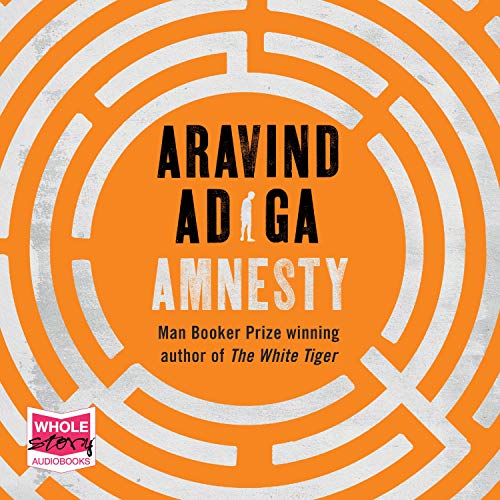
Aravind Adiga’s novel ‘Amnesty’ follows Danny — short for Dananjaya Rajapratnam — a Tamil Sri Lankan who fled persecution and ended up working illegally in Sydney as a shop assistant and house cleaner. One day, he reads that a client has been found dead. He recognises a jacket at the crime scene. He knows who did it.
And then the murderer calls and asks him to clean the house before he flies home to India tomorrow.
Danny’s dilemma is agonising — go to the police and face deportation, or stay silent and let a killer walk free. The whole novel turns on a single fact: Danny is not a citizen of Australia. He lives here. He works here. He has friends here. But he has no security. He has no rights. Doing the right thing could cost him everything he has built.
He reports the murder. The last line of the book finds him being processed for deportation.
Our citizenship makes a huge difference to who we are and how we behave. This Sunday, that insight opened up Philippians 3:12–4:1.
Press on. You’re not there yet.
Paul begins with honesty: ‘Not that I have already obtained this or have already been made perfect.’ He is writing to counter a stream of early false teaching that said salvation was a done deal, so it didn’t matter how you lived. If sin is already paid for, why not indulge?
Paul’s answer is that while we are saved, we are not yet perfect — and a genuinely saved person knows it. We still sin. We still let ourselves and each other down. That can wear us out. When the same battle comes round for the hundredth time, it is easy to despair.
Paul’s response is not sympathy — it is a sporting metaphor. Press on. Run the race. Fix your eyes on the prize. Athletes set personal bests on race day, not in training, because the prize sharpens everything. That is how the Christian life works: the prize of perfection — the sinless, resurrection self we will one day be — is the thing that keeps us running.
Throw away the rear-view mirror
In the 1976 film ‘The Gumball Rally’, Raul Julia’s Italian racing driver tears off his rear-vision mirror and declares: ‘What’s behind me is not important.’ It is a throwaway comedy moment, but Paul is making exactly this point.
Forgetting what is behind means two things. First, stop rehearsing past failures. Whatever you have done — last night, last year, fifty years ago — it will not be held against you by God. Guilt and shame pull you back to an old identity that is no longer yours. Throw away the mirror.
Second, stop resting on past victories. Ben Hunt’s 2015 grand final howler haunted him for a decade. When he returned to the Broncos in 2025 and they won the premiership, that mistake was erased by the prize. But equally — the 2025 Broncos did not walk into the 2026 season saying, ‘We won last year, that’ll do.’ You can’t look back in either direction. There is always a new personal best to chase.
Live up to what you’ve already attained
Verse 16: ‘Only let us live up to what we have already attained.’ You are already on the team. You already have the new identity in Christ. You are already a saint — someone set apart, being prepared for holiness. When you sin, you let the team down, but you do not stop being on it. Imagine Ben Hunt waking up on game day and deciding not to show because he stuffed up in 2015. Or deciding not to bother because he won last year. His teammates would be furious.
You are contracted. Show up. Play your part. Live up to who you already are.
A warning about earthly citizenship
Paul writes, even with tears, about those who ‘live as enemies of the cross of Christ’. Their god is their stomach. Their glory is in their shame. Their mind is on earthly things.
Note the target: not enemies of Christ, but of the cross. The cross represents suffering. Some people start well but fall away when it gets hard — when Christianity costs something. If you are only in it for the earthly returns — the comfort, the community, the sense of wellbeing — those things will not be enough when the race gets painful. Every runner knows there is a pain barrier. Those who give up there never finish the race.
Danny in Amnesty had built a small, fragile life in Sydney. It was taken from him in one sentence because he was never truly a citizen here. If your citizenship is on earth, you are on shaky ground.
Our citizenship is in heaven
Verse 20: ‘But our citizenship is in heaven.’ For the Christian, this earth is a transit lounge. We are here doing business — kingdom business — while we wait. We are not citizens of this place. We are passing through.
That changes how we handle difficulty, temptation, and loss. The love of earthly things — money, status, comfort, security — entangles us because we keep acting as though this is home. It is not.

Two anchors help us hold on. First, a Saviour from there. To gain citizenship in any country, it helps enormously to have a relative who is already a citizen — someone who can vouch for you and open the door. We have exactly that in Jesus. He is not merely a good man. He is God in human flesh — from heaven itself. The church is his bride. He has made us family. Heaven’s entry requirement is perfection, and he supplies it. Our passport is stamped in his blood.
Second, a promised resurrection. We will have new bodies — glorious, pain-free, never hungry, never ill, never beaten by death. The prize is staggering. A gold medal tarnishes. A premiership trophy gathers dust once the next season starts. But this inheritance cannot be taken. No one wins it next year.
Therefore: Stand firm
Paul’s closing line in our passage is a direct command: ‘That is how you should stand firm in the Lord, dear friends.’ The logic of citizenship sustains the imperative. You know where you are going. You know who secured your entry. You know what is waiting. Therefore — whatever it is you need to hold on to — hold on. Do not trade your heavenly citizenship for earthly comfort.
Run the race. Throw away the mirror. Live up to the team you are on.
Discussion questions
• Where are you most tempted to live as a citizen of earth rather than heaven this week?
• Is there something in your past — a failure or a victory — that you need to stop looking back at?
• Who in your life is running the race well? Have you told them?
• What would it look like practically to ‘live up to what you have already attained’?
 Beverly Hills Baptist Church